Understanding Child Support in Australia: A Comprehensive Guide for Parents

Child support in Australia is financial support paid for a child's benefit after parents separate. Services Australia can calculate payments under a statutory formula, while parents may use limited or binding agreements. The right approach depends on income, care arrangements, expenses, collection risks and each family's long-term circumstances.
Introduction
Child support decisions can affect household stability long after separation. An apparently straightforward assessment may become complicated when income changes, care is disputed, a parent controls a business, or school and medical expenses sit outside ordinary payments.
This guide explains child support assessments, agreements, collection, enforcement and dispute options. It also identifies the records parents should preserve and when legal advice can prevent an avoidable problem.
Child support is administered by Services Australia under the Child Support (Assessment) Act 1989 (Cth), through one of three pathways: an administrative assessment, a limited agreement or a binding agreement.
Key takeaways
- Child support is not determined by income alone: the formula weighs both parents' financial positions, the statutory cost of children and the care each parent provides.
- Services Australia commonly calculates child support using taxable income, care and statutory cost tables.
- An online calculator provides an estimate only, not a final assessment.
- Limited and binding agreements create different risks, safeguards and termination options.
- Accurate care calendars, tax records and expense evidence can materially affect a dispute.
- Services Australia can collect overdue child support using substantial administrative powers.
- Legal advice is particularly important where income, parentage, care or future expenses are contested.
Summary table
The principal choice is between relying on Services Australia's administrative formula and documenting a private agreement.
| Option | How it works | Main advantage | Main risk | Legal advice |
|---|---|---|---|---|
| Administrative assessment | Services Australia applies the statutory formula | Accessible and capable of periodic reassessment | The formula may not reflect unusual expenses or financial structures | Useful where facts or calculations are disputed |
| Limited child support agreement | Written agreement operates alongside an assessment | Allows agreed payment arrangements with more flexibility than a binding agreement | Its operation depends on statutory requirements and an underlying assessment | Strongly recommended |
| Binding child support agreement | Written agreement can set payments independently of the assessed amount | High certainty and extensive customisation | Difficult to end if circumstances later change | Independent legal advice is mandatory for each party |
How is child support assessed in Australia?

Services Australia generally assesses child support by considering each parent's child support income, their share of combined income, the child's statutory costs and the care provided by each parent. The formula can also account for relevant dependent children, multiple child support cases and other circumstances prescribed by legislation.
The framework is established by the Child Support (Assessment) Act 1989. Services Australia applies that legislation using financial and care information supplied by parents and obtained from government records.
Income is adjusted before the formula is applied
A parent's taxable income is an important starting point, but it is not simply divided between households. Services Australia works out each parent's child support income after applying the statutory self-support amount and relevant adjustments.
The parents' child support incomes are then combined. Each parent's share of that combined amount produces an income percentage. This helps determine how responsibility for the child's costs should be allocated.
Complications can arise where a parent:
- has not lodged an up-to-date tax return
- receives income through a company, trust or partnership
- has recently changed employment
- earns irregular commissions or contract income
- receives non-cash benefits connected with work or a business
- has financial resources that taxable income does not adequately reveal
- supports children from another relationship.
An assessment based on incomplete tax information may not present the whole picture. Parents should check which income year and financial information Services Australia has actually used.
Care affects the assessment
Services Australia converts each parent's level of care into a care percentage and then a cost percentage. The cost percentage represents the portion of the child's costs that the parent is treated as meeting directly through care.
This makes care evidence important. A parenting plan may describe the intended arrangement, but Services Australia may need to examine what is happening in practice. Useful records include:
- a calendar showing overnight care
- school attendance and collection records
- written communications about changes to care
- travel records
- medical appointments
- evidence of extended absences or withheld time.
Parents should record actual care consistently rather than trying to reconstruct it after a dispute begins. Informal changes can affect child support even when existing parenting documents have not been formally amended.
The cost of children is statutory
Services Australia uses statutory cost tables rather than adding every grocery bill, utility account and clothing receipt. The tables consider matters including the parents' combined child support income, the children covered by the case and their ages.
That approach creates consistency, but it does not mean every family's real expenditure will match the formula. Private school fees, substantial medical treatment, disability-related expenses and long-distance contact costs may require separate consideration.
A calculator is only an estimate
A child support calculator Australia parents use online can help with preliminary planning. Services Australia's child support estimator is the appropriate government starting point.
An estimate can be unreliable if the income, care or family details entered are incomplete. It also cannot decide disputed facts, determine a change of assessment application or replace advice about an agreement.
When can a child support assessment be changed?
A parent can seek a change to an administrative assessment where special circumstances make the ordinary formula unfair or inappropriate under the statutory grounds. The applicant needs more than a general sense of unfairness. They must identify a recognised ground and support it with relevant, organised evidence.
A change of assessment may be considered where circumstances involve:
- unusually high costs of maintaining contact with a child
- special needs or significant health expenses
- education costs consistent with the parents' expectations
- income, earning capacity, property or financial resources
- legal duties to support another person
- payments or benefits provided directly for the child's benefit
- an assessment that does not properly reflect a parent's financial position.
The precise statutory test matters. For example, voluntarily reducing paid work does not automatically result in income being attributed to a parent. Services Australia must consider the applicable earning-capacity requirements and the evidence explaining the change.
Build evidence around the legal ground
An effective application should connect each document to the ground being relied upon. Sending a large collection of unstructured bank statements can obscure the point.
A clearer evidence package might include:
- a short chronology
- the current assessment
- relevant tax returns and financial statements
- invoices for disputed expenses
- school enrolment correspondence
- specialist reports or treatment plans
- evidence of historical parental intentions
- company or trust material where financial resources are in issue
- a concise explanation linking the documents to the statutory test.
Services Australia provides information about the change of assessment process. Objection and review rights can carry strict procedural requirements. Parents should act promptly after receiving an adverse decision.
What is a child support agreement in Australia?

A child support agreement Australia recognises is a written arrangement that complies with federal legislation. Parents may choose a limited or binding agreement. Both can address periodic payments and other child-related expenses, but they differ in legal advice requirements, connection to assessments and termination rights.
Agreements can cover arrangements such as:
- regular periodic child support
- school fees and related education costs
- private health insurance
- medical, dental and therapy expenses
- extracurricular activities
- payments made directly to a school or service provider
- lump sum arrangements where statutory conditions are satisfied.
A verbal promise about school fees is not a substitute for a properly drafted agreement. Informal arrangements can produce disputes about what was promised, when it ends and whether the payment is additional to assessed child support.
Limited child support agreements
A limited agreement requires an administrative assessment to be in place. The annual rate payable under the agreement must satisfy the statutory relationship with that assessment. Independent legal advice is not mandatory, although entering without advice can expose a parent to poorly understood consequences.
Limited agreements may suit parents who want structure without the rigidity of a binding agreement. However, the document still needs to comply with the legislation. Calling an arrangement a limited agreement does not make it valid.
Binding child support agreements
A binding agreement can establish payments above or below an administrative assessment. An assessment does not need to be in place before the agreement is made.
Each party must obtain independent legal advice before signing. The lawyers must advise their respective clients about the agreement's effect and its advantages and disadvantages at the time advice is provided. The required certificates must accompany the agreement.
This safeguard matters because a binding agreement is deliberately difficult to escape. A later fall in income, new relationship or disagreement about expenses may not provide an automatic exit.
Draft for foreseeable change
A sound agreement should do more than state an amount. It should address foreseeable uncertainty, including:
- what happens when care changes
- treatment of school fee increases
- whether extracurricular expenses require prior consent
- how reimbursements are requested and documented
- whether payments are credited against periodic support
- what happens if a child changes school
- responsibility for uninsured medical expenses
- review events and dispute procedures
- how the agreement interacts with overseas relocation.
Generic drafting is risky. The agreement must fit the family's real payment practices and the legislation in force when it is executed. Services Australia explains the distinction between limited and binding child support agreements.
How are child support payments collected?
Child support payments Australia parents receive can be managed privately or collected through Services Australia. Private collection gives parents direct control but requires reliable payment behaviour and good records. Agency collection provides administrative oversight and access to enforcement powers when registered liabilities are not paid.
Private collection
Under private collection, the paying parent transfers money or pays agreed expenses directly. This can work where communication is functional and payment history is reliable.
Both parents should retain:
- bank statements
- receipts for direct expenses
- clear payment descriptions
- written confirmation of unusual credits
- copies of the assessment or agreement
- a running payment ledger.
Cash payments create obvious evidentiary problems. If a dispute later arises, the payer may struggle to prove what was paid or whether it was intended as child support.
A parent should not assume that buying clothes, paying rent or transferring money to a child will automatically reduce the registered liability. Whether a payment receives credit depends on the legal and administrative rules applying to it.
Services Australia collection
Under agency collection, Services Australia records liabilities, receives payments and transfers collected amounts to the receiving parent. This pathway can reduce direct conflict and create an official account history.
It can be particularly useful where there is:
- a history of missed payments
- coercive or controlling behaviour
- disagreement about the balance owing
- irregular employment
- concern that direct payment discussions are unsafe
- a need for formal enforcement.
Parents should still review statements. Administrative collection does not remove the need to identify incorrect income, care information or payment credits.
What happens when child support is not paid?
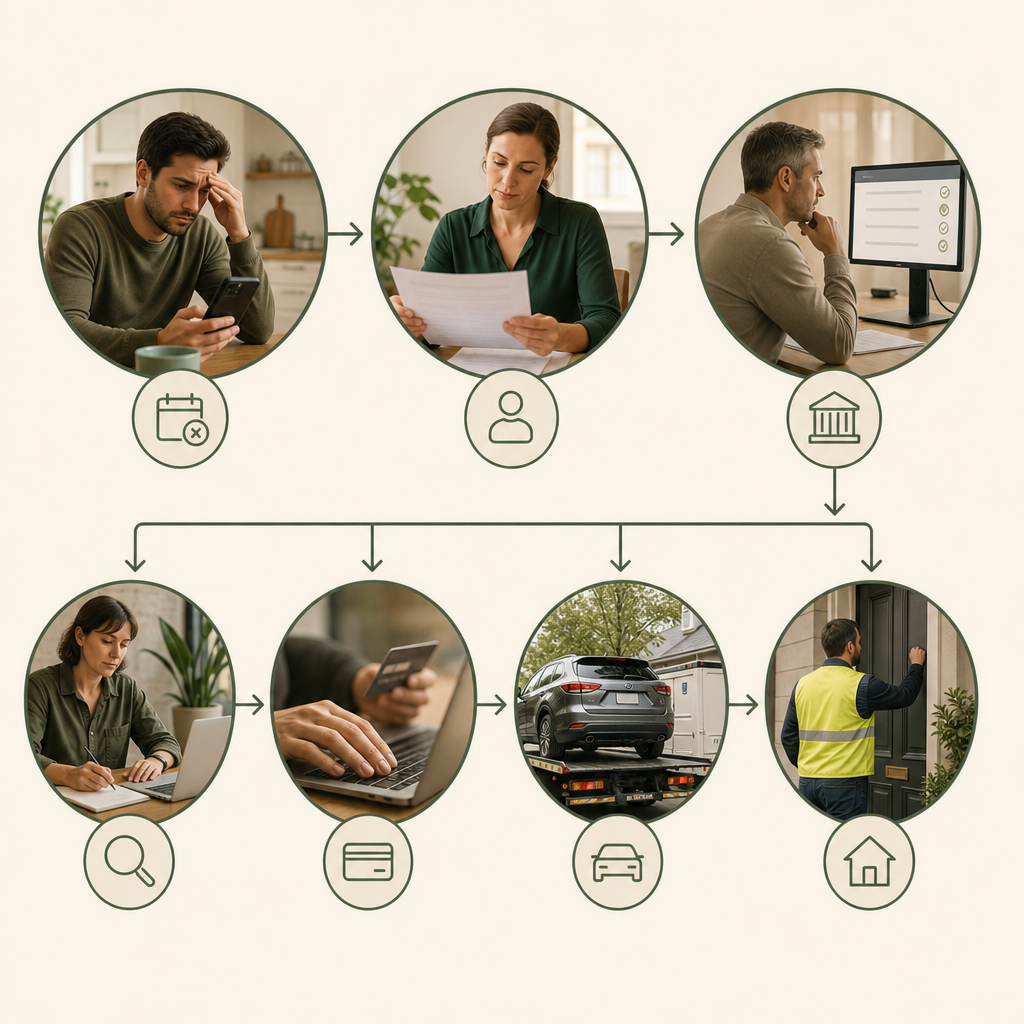
Unpaid registered child support becomes a debt recoverable under federal law. Services Australia may use administrative collection powers, while court action may be available in appropriate circumstances. The correct response depends on whether the liability is registered for collection, the debtor's financial position and any dispute about the underlying assessment.
The collection framework is principally governed by the Child Support (Registration and Collection) Act 1988.
Services Australia's enforcement options can include:
- deductions from salary or wages
- deductions from certain government payments
- intercepting tax refunds
- collecting money from bank accounts or third parties
- litigation to recover the debt
- departure prohibition action in appropriate cases.
Services Australia outlines its approach to overdue child support payments.
Do not ignore a disputed debt
A parent who believes the amount is wrong should not simply stop paying. The liability may continue to accrue while an objection, review or court process is considered.
The practical steps are to:
- obtain the current assessment and account statement
- identify the exact decision or transaction in dispute
- confirm the recorded income and care details
- gather proof of payments already made
- check available objection or review pathways
- seek advice about interim payment and recovery risks.
The receiving parent should also avoid relying on assumptions about enforcement. Services Australia needs accurate information about employment, assets, bank accounts or other collection leads.
When can a child support dispute go to court?
Courts do not replace Services Australia as the ordinary assessment body, but they retain important child support powers. Court proceedings may concern parentage, departure from an assessment, enforcement, recovery, the validity or setting aside of an agreement, or a legal issue arising from an administrative decision.
The Federal Circuit and Family Court of Australia explains that child support applications depend on the type of decision and the steps already taken through Services Australia. The Court's child support guidance should be read alongside the relevant legislation.
Court involvement may be relevant where:
- parentage is disputed
- a binding agreement is alleged to be invalid
- a party seeks to have an agreement set aside
- administrative review options have been exhausted
- enforcement through the agency is unsuitable or unavailable
- the dispute involves both child support and related family law proceedings.
Setting aside a binding agreement is not simply a matter of showing regret. The court must be satisfied that a statutory ground applies. This is why legal advice before signing is more valuable than trying to undo unsuitable drafting later.
Two hypothetical child support scenarios
These hypothetical scenarios show why apparently similar families can require different strategies. They are not client outcomes or predictions. Each result would depend on the evidence, current legislation, Services Australia's findings and the exact wording of any existing parenting or child support documents.
Scenario A: business income does not tell the full story
Imagine a parent whose taxable income falls after separation while a family company continues paying personal expenses. The other parent assumes Services Australia will automatically treat every company payment as personal income.
That assumption may be wrong. The issue requires evidence showing the parent's actual financial resources, control of the entity and the nature of each benefit. A targeted change of assessment application may be appropriate, but accusations without company records are unlikely to resolve the issue.
The practical lesson is to distinguish suspicion from proof. Financial statements, loan accounts, trust distributions and business-paid expenses may be more useful than broad claims about hidden income.
Scenario B: school fees were agreed informally
Consider parents who verbally agreed that their child would remain at a private school. One parent later argues that ordinary child support covers every education expense. The other says school fees were always intended to be paid separately.
Relevant evidence might include enrolment documents, historical payment patterns, emails about the school choice and each parent's financial circumstances. Depending on the facts, the issue could be addressed through a change of assessment process or a properly drafted agreement.
The practical lesson is that shared intentions should be documented before conflict develops. A clear agreement should identify tuition, levies, uniforms, devices, excursions and the approval process for additional expenses.
When should a child support lawyer be involved?
A child support lawyer should be involved when the financial facts are unclear, a formal agreement is proposed, care is contested, arrears are accumulating or administrative review may be required. Early advice can identify the correct process and prevent parents from spending time on arguments that do not meet the legal test.
Legal assistance can include:
- checking a Services Australia assessment
- analysing income and care calculations
- preparing change of assessment material
- advising on objections and review rights
- drafting or reviewing a child support agreement
- providing mandatory advice for a binding agreement
- addressing arrears and enforcement
- coordinating child support with parenting and property matters
- advising on court jurisdiction and evidence.
Child support should not be considered in isolation. Parenting arrangements affect care percentages. Property settlements can affect cash flow. Business structures may influence the available financial evidence. Family violence can also determine whether direct collection or negotiation is appropriate.
Steven Clark is actively involved in supervising operations and overseeing standards of work. We believe clients should be able to relate to us as people as well as lawyers. That requires direct advice about risks, evidence and likely procedural pathways, not promises about outcomes.
Parents seeking advice can speak with experienced Gawler family lawyers about how child support interacts with their broader family law position.
The most important work happens before the dispute
Our view is that child support outcomes often turn on evidence architecture rather than forceful correspondence. Parents who preserve clean income records, care calendars, payment ledgers and written expense agreements are better placed to identify errors, answer allegations and choose the correct legal pathway before positions harden.
This is where many child support guides stop too early. They describe the formula but do not explain how parents should organise the information that feeds it.
A practical child support file should contain separate sections for:
- every assessment and notice from Services Australia
- tax and business records
- actual care calendars
- bank evidence of payments
- school, health and extracurricular expenses
- written agreements and negotiations
- objection, review and court deadlines
- a chronology of significant changes.
The chronology is particularly useful. It should identify changes in care, employment, income, schooling and payment arrangements. Each entry should point to a supporting document.
This disciplined approach serves both parents. A payer can prove payments and explain genuine income changes. A recipient can demonstrate care arrangements, unpaid liabilities and expenses outside the ordinary formula.
The objective is not to produce the largest possible file. It is to make the decisive facts easy to verify. Reliable evidence usually carries more weight than repeated allegations.
If an assessment, proposed agreement or unpaid liability needs careful review, contact Steven M Clark Lawyers before accepting obligations or allowing review options to pass.
References
The following primary and government sources explain Australia's child support framework. Legislation and administrative guidance can change, so parents should confirm the current version and obtain advice about how it applies to their facts before making significant financial or legal decisions.
- Child Support (Assessment) Act 1989, Federal Register of Legislation
- Child Support (Registration and Collection) Act 1988, Federal Register of Legislation
- Services Australia, Child support assessments
- Services Australia, Child support agreements
- Federal Circuit and Family Court of Australia, Child support
Frequently asked
Questions about this
How does Services Australia calculate child support?
Services Australia applies a statutory formula using both parents' child support incomes, their respective income shares, the costs attributed to the children and each parent's level of care. Adjustments may apply for relevant dependent children, multiple cases and other recognised circumstances.
Is the Services Australia child support calculator legally binding?
No. The estimator provides an indicative result based on the information entered. It is not a formal assessment and cannot determine disputed care, complex income issues, change of assessment grounds or the legal effect of an agreement.
Can parents make their own child support agreement?
Parents can negotiate an agreement, but it must satisfy statutory requirements to operate as a limited or binding child support agreement. A binding agreement requires each parent to receive independent legal advice before signing.
Can a binding child support agreement be changed?
A binding agreement generally cannot be changed informally or ended unilaterally. The parties may enter a compliant replacement or termination agreement, or a court may set it aside where a statutory ground is established.
What can I do if the other parent stops paying child support?
Check whether Services Australia is collecting the liability and obtain an updated account statement. Provide useful information about employment, assets or payment history. Legal advice may be required if recovery remains ineffective or the debt is disputed.
Does equal care mean no child support is payable?
Not necessarily. Care is only one part of the formula. A payment may still arise where parents have different child support incomes or other relevant adjustments apply.
Are school fees included in child support?
Ordinary assessments use statutory costs rather than reimbursing every actual expense. School fees may be addressed through a change of assessment application or a child support agreement, depending on the evidence and the parents' intentions.