Testamentary Trusts in Australia: How They Work and Whether Your Will Needs One

A testamentary trust is a trust created by your will that only comes into existence when you die. A trustee holds and manages the inheritance for your chosen beneficiaries under rules you set. Families use them to protect inheritances from creditors and relationship breakdown, and to give minors access to adult tax rates.
Most people making a will think about who gets what. Fewer think about what happens to an inheritance after it lands in someone's hands. A son in a difficult marriage, a daughter with a gambling problem, a grandchild who is six years old: in each case, how the gift is structured can matter as much as who receives it.
This guide explains testamentary trusts in plain English: how they work, when they help, what they cost, and where they fall short. It is written for parents, grandparents and business owners who are making or updating a will and want to know whether a testamentary trust belongs in it.
Key Takeaways
- A testamentary trust is written into your will and starts only on your death. It is different from a trust you set up while alive.
- The main benefits are asset protection (bankruptcy, creditors, relationship breakdown) and protection for vulnerable or spendthrift beneficiaries.
- Income from estate assets distributed to minor children through a testamentary trust is generally taxed at adult marginal rates, including the tax-free threshold. Only assets that come from the deceased estate (or their proceeds) qualify.
- Trusts bring ongoing administration, tax returns and trustee duties. Superannuation and jointly held assets will not flow into the trust unless you plan for it.
- A trust is only as good as the drafting and the trustee. A template will or DIY kit is a poor way to create one.
Summary Table
| Feature | Standard will (outright gifts) | Will with a testamentary trust |
|---|---|---|
| When it starts | On death, assets pass directly | On death, assets are held by a trustee |
| Control after death | Beneficiary has full control | Trustee controls, within the terms you set |
| Asset protection | Limited once the gift is received | Stronger, because the beneficiary may not own the assets |
| Tax for minor beneficiaries | Penalty rates generally apply to unearned income | Excepted trust income is generally taxed at adult rates |
| Ongoing admin | Minimal after distribution | Trust records, annual tax returns, trustee decisions |
| Upfront drafting | Simpler | More detailed, needs careful advice |
| Best suited to | Simple estates with capable, stable beneficiaries | Young, vulnerable or at-risk beneficiaries, larger estates, blended families |
What is a testamentary trust and who plays which role?
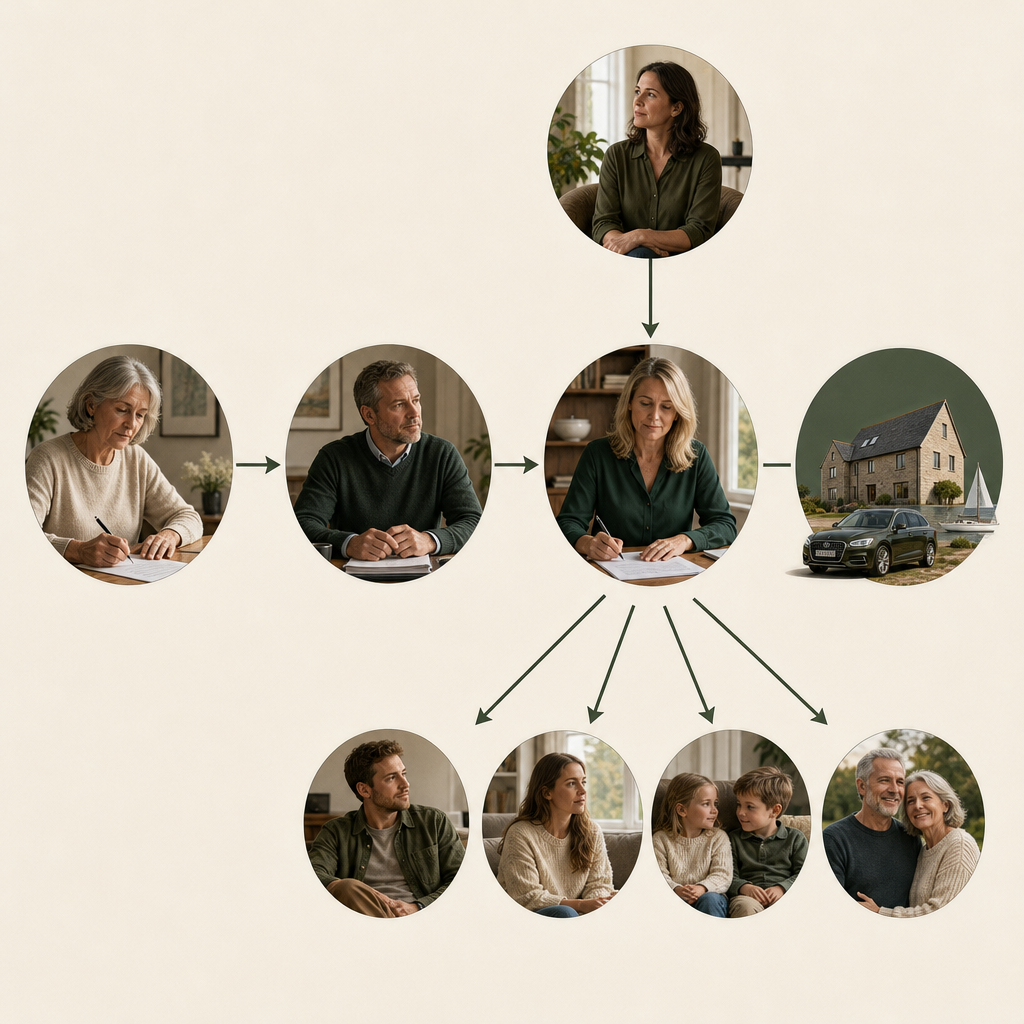
A testamentary trust is a trust whose terms are set out in your will. It takes effect on your death, after your executor has dealt with the estate. Three roles matter: the trustee who manages the assets, the appointor who can replace the trustee, and the beneficiaries who benefit.
The will-maker
You, the will-maker, decide the framework. You choose whether the trust is for one person or a whole family group, how long it lasts, what the trustee may do, and who gets the capital at the end. Because the trust sits inside your will, it cannot be created later by someone else on your behalf.
The trustee
The trustee holds legal title to the trust assets and must act in the interests of the beneficiaries, not their own. That means keeping records, investing prudently, lodging tax returns and making distribution decisions in good faith. Trustee duties arise under the trust terms and state trusts legislation, and they are real obligations.
The appointor
The appointor has the power to hire and fire the trustee. This role is easy to overlook and often the most important. If the person holding it is poorly chosen, the trustee's independence is undermined. If nobody is named, replacing a trustee who has died or lost capacity can become slow and costly.
The beneficiaries
Beneficiaries are the people the trust exists for. In a discretionary testamentary trust, the trustee decides who receives income and capital and when. That flexibility is what produces most of the tax and protection benefits.
How it connects to the estate
A testamentary trust does not bypass the normal process. Your executor still locates assets, pays debts and, where needed, obtains a grant of probate. Only then do the relevant assets move into the trust. Our separate guides on executor duties and estate administration and on probate and letters of administration explain those steps in detail.
Why do families use testamentary trusts?
Families use testamentary trusts mainly to protect inherited wealth and the people receiving it. If a beneficiary is bankrupt, sued or separating, assets they own outright are exposed. Assets held in a trust they do not own are generally harder to reach. A trust also puts a safety net around beneficiaries who struggle with money.
Protection from bankruptcy and creditors
When a beneficiary receives an inheritance outright, it becomes their property. If they later go bankrupt, a trustee in bankruptcy under the Bankruptcy Act 1966 can generally access property they own. If the inheritance sits in a discretionary trust, the beneficiary has no fixed entitlement to it, only the possibility that the trustee will benefit them. That distinction is the foundation of asset protection.
Protection on relationship breakdown
This is the reason we hear most often. Imagine a mother, whom we will call Helen, who wants to leave her estate to her adult son. His marriage is under strain. If Helen leaves him $600,000 outright, that money could be pooled with the rest of the property in a later settlement under the Family Law Act 1975. If she instead leaves it to a discretionary testamentary trust with an independent trustee, the money is much better placed to stay in the family line. This is an illustration only, but it reflects a very common set of concerns.
Trusts are not bulletproof. Courts can look at how a trust operates in practice, and the High Court's decision in Kennon v Spry (2008) shows that trust property can sometimes be treated as part of the property of a marriage. The more control a beneficiary has over the trust, the greater the risk. That is why who you appoint as trustee and appointor matters. Where relationship breakdown is a live concern, we also recommend speaking with a family law practitioner alongside your estate planning.
Protection for vulnerable beneficiaries
Some beneficiaries are not able to manage a lump sum. They may have a disability, an addiction, a gambling problem or a history of financial trouble. A trust lets the trustee pay for housing, medical costs, education or living expenses without handing over a cheque that can be spent in a week.
Blended families
In a blended family, a trust can allow a surviving partner to benefit during their life while keeping the capital for children from an earlier relationship. Without careful drafting, a surviving partner who receives everything can leave the estate to anyone they choose, including a new partner. A trust can reduce that risk.
How are testamentary trusts taxed for minor beneficiaries?
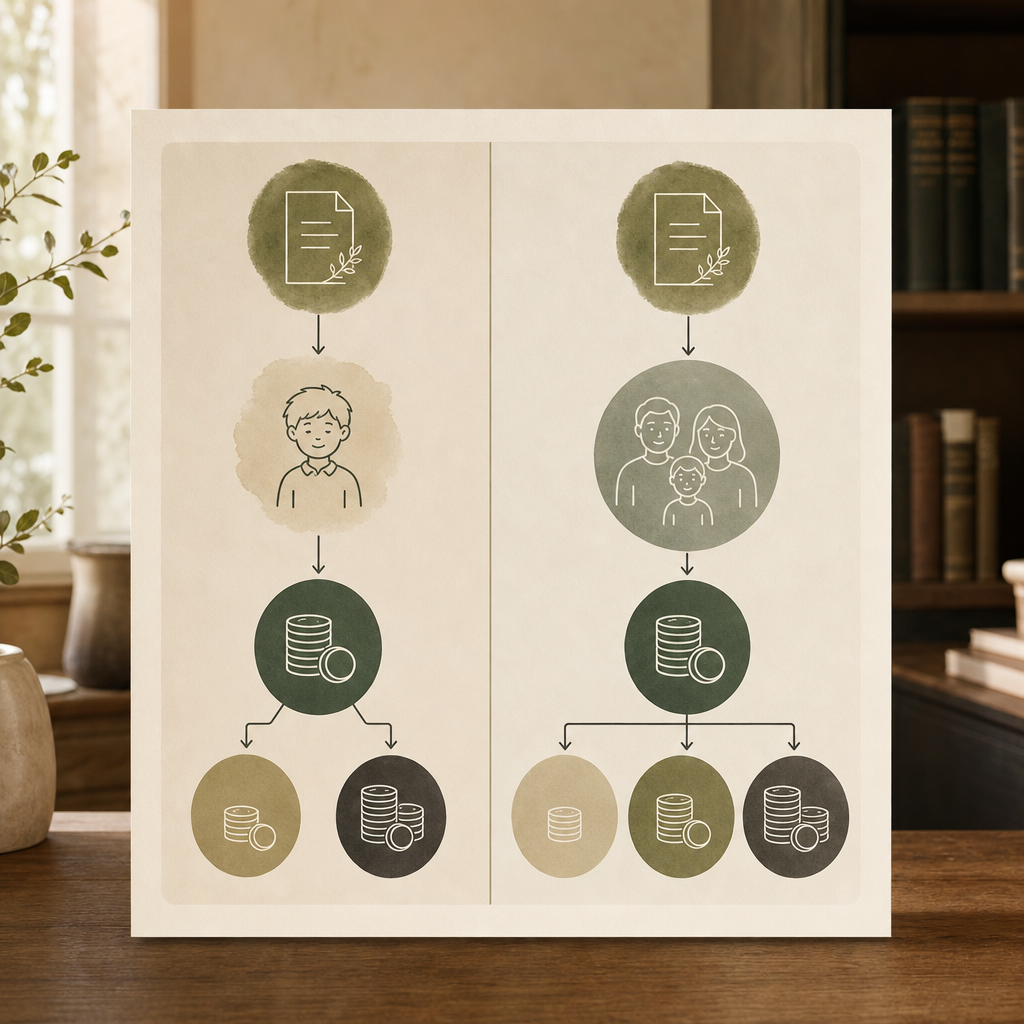
Income that a testamentary trust distributes to a minor child is generally taxed at ordinary adult resident rates, rather than the higher penalty rates that apply to most unearned income of children. This means the child can use the tax-free threshold. The concession applies only to income from assets that came from the deceased estate.
The usual position for children
For most children under 18, unearned income such as dividends, interest and trust distributions is taxed under special rules in Division 6AA of the Income Tax Assessment Act 1936. According to the Australian Taxation Office (https://www.ato.gov.au), a minor's unearned income above $416 is taxed at penalty rates, and once it exceeds $1,307 the whole amount is taxed at 45%. These rules exist to stop parents shifting income to children to reduce tax.
Excepted trust income
Income a minor receives from a testamentary trust is generally treated as excepted trust income. It is taxed at ordinary resident adult rates, which include the tax-free threshold of $18,200 for residents (ATO tax rates: https://www.ato.gov.au/tax-rates-and-codes/tax-rates-australian-residents). A child with no other income can therefore receive up to that amount from the trust without paying tax on it, with tax then applying at the progressive rates above that level.
Over several children, that can be a meaningful difference compared with the same assets being held outright by a surviving parent and taxed at their marginal rate. The benefit is most relevant where the estate holds income-producing assets such as shares, rental property or a business interest.
The 2019 integrity rule
From 1 July 2019, the law was tightened. Excepted trust income treatment applies only to income from assets that came from the deceased estate, or the proceeds of those assets (including investments of them). If a family member adds other money to the trust, income from that money does not qualify and is taxed under the penalty rules. In practice, this means the trust should be kept clean. Do not let relatives gift into it, and keep estate assets separate from anything else.
A word of caution on tax
Tax settings and thresholds change. Rates and thresholds in this article reflect current ATO guidance as we understand it, but you should always confirm the position with the ATO or your accountant before relying on it. Also, the tax benefit alone is rarely a good enough reason to set up a trust. It should sit alongside a genuine protection or control reason.
What types of testamentary trust are there?
The three main types are discretionary, protective and special disability trusts. A discretionary trust gives the trustee flexibility over who benefits. A protective trust shields a particular person from their own financial decisions. A special disability trust is a specific structure for a person with a severe disability, with social security concessions.
Discretionary testamentary trusts
This is the most common form. The trustee has discretion over how much income and capital each beneficiary receives, and when. That flexibility allows income to be directed to the beneficiary with the lowest tax rate in a given year, and it keeps the assets out of any one beneficiary's personal ownership. It suits families with children, adult beneficiaries facing risk (such as business owners or people in unstable relationships), and larger estates.
Protective trusts
A protective trust is aimed at a beneficiary who could be harmed by having direct access to money. Typical examples are an addiction, a history of gambling, undue influence from others, or poor financial judgement. The trust terms may limit payments to specific needs, such as rent, medical care or education, and may give the trustee power to withhold funds when they would be misused. The drafting needs real care, because the trustee must be able to say no without causing family conflict.
Special disability trusts
A special disability trust is designed to help provide for the future care and accommodation needs of a person with a severe disability. It has specific eligibility requirements under social security law, and it can attract concessions for the beneficiary's Centrelink assessments. These trusts are more technical than a standard discretionary trust and should only be set up with specialist advice. If a child or grandchild has a disability, this conversation should happen early.
Which one suits you?
Many wills combine features. A discretionary trust for the general family can sit alongside a protective trust for one child. The right mix depends on your family, your assets and your concerns, which is why a single template cannot get it right.
What are the limitations and costs of a testamentary trust?
A testamentary trust brings ongoing administration, annual tax returns and trustee obligations that a simple outright gift does not. It also may not capture every asset. Superannuation, jointly held property and some business interests can pass outside your will unless you plan for them in advance.
Ongoing administration
A trust has to be run. The trustee needs a tax file number, a bank account, records of decisions and a tax return each year. Distribution resolutions must be made properly and on time. For a family with a modest estate, that work can outweigh the benefit. Ask honestly whether your trustee is willing and able to do it, or whether professional fees will be incurred.
Costs
Drafting a will with a testamentary trust takes more time and care than a basic will, so the upfront legal fee is higher. The ongoing costs are accounting and tax return fees, and possibly trustee fees if you use a professional. We do not quote figures in a general article because they vary with the estate and the structure. We will give you a clear estimate for your situation at your first meeting.
Assets that may not flow into the trust
This is where many plans quietly fail. Three common examples:
- Superannuation. Super is generally not part of your estate. The fund trustee pays death benefits to your dependants or your legal personal representative, depending on your nomination and the fund rules. If you want super to reach the trust, you generally need a valid nomination directing it to your estate, and the tax effects need to be understood first.
- Jointly held assets. Property held as joint tenants passes by survivorship to the surviving owner. It never becomes part of the estate, so it cannot go into the trust.
- Family trusts, companies and partnerships. Control of these is governed by their own documents, such as trust deeds and constitutions. Your will cannot override them.
We often find that a will looks sound on paper, but the assets that matter most are held in a way that bypasses it. A good estate plan reviews ownership structures first, then drafts the will.
Timing and flexibility
Once your will takes effect, you cannot change it. Circumstances may change after your death in ways you did not predict. Good drafting builds in flexibility, such as powers for the trustee to vary the trust within limits, and a mechanism to replace the trustee.
How do you choose a trustee and keep your will current?
Choose a trustee who is trustworthy, financially capable and able to say no to family members. Many people appoint a mix, such as a trusted family member alongside an independent person. Then review your will regularly, particularly after births, deaths, separations, new businesses or changes in your assets.
Picking the trustee
Consider these questions:
- Is this person organised enough to keep records and meet deadlines?
- Can they resist pressure from a beneficiary who wants money?
- Do they get along with the beneficiaries and with each other?
- What happens if they die, lose capacity or fall out with the family?
A beneficiary can be a trustee, and many wills allow it. But if the main purpose is asset protection, giving a beneficiary sole control can weaken it. An independent co-trustee or a carefully chosen appointor is often a better balance. Think about succession too: name replacements so the trust does not stall.
Keeping your will current
A will is a snapshot. Review it when:
- you marry, separate or divorce, or your children do;
- a beneficiary's circumstances change, such as illness, addiction or a business failure;
- you buy or sell significant assets, or restructure a business;
- a nominated trustee, appointor or executor dies or becomes unsuitable;
- tax or superannuation rules change.
We recommend a review at least every few years, and straight away after any major life event. Steven Clark is actively involved in supervising operations and overseeing standards of work, and that includes making sure the wills we prepare are reviewed against your current situation, not just filed away.
When a testamentary trust is the wrong answer
A testamentary trust is not for every family, and we would rather tell you that than sell you one. For a modest estate with capable, stable adult beneficiaries, a clear and carefully drafted standard will is often the better choice. The trust should solve a real problem, not add complexity for its own sake.
Here is where we see the most common mistakes.
The trust is added because it sounds clever. Some advisers and online services present testamentary trusts as an automatic upgrade. They are not. If there is no minor, no vulnerable beneficiary, no meaningful risk of creditors or relationship breakdown, and no tax advantage worth having, you are creating administration for your family to carry. We will say so.
The trust is set up by a template. A testamentary trust depends on the detail: who is appointor, what powers the trustee has, how long it runs, what happens if a beneficiary dies, how it deals with a blended family. Template wills and DIY kits do not ask about your family. They produce generic clauses that may not work when tested. We do not subscribe to that approach. Every will we prepare is tailored to the family in front of us, and that is where the value of the advice sits.
The plan ignores what sits outside the will. If your wealth is mostly in super, joint property or a family trust, a testamentary trust may protect very little. We start by mapping what you own and how it is held, then decide whether a trust adds anything.
The trustee is chosen by default. Naming the eldest child as trustee because it feels fair can create a conflict if that child is also a beneficiary with a stake in the outcome. We talk through the dynamics with you, including the awkward ones, because an estate plan that avoids them tends to fail at the worst possible time.
The test we apply is simple: if we removed the trust, what specific harm could befall the people you are trying to protect? If we can name the harm, the trust earns its place. If we cannot, we say so.
Talk to us about your will
If you are making or updating a will and wondering whether a testamentary trust suits your family, we would be glad to help. We will listen first, look at what you own and how it is held, and tell you straight whether a trust earns its place. Our lawyers are experienced and hardworking, and we tailor every will to the family it is for.
Book a confidential consultation with Steven M Clark to review your will and discuss whether a testamentary trust is right for you.
This article is general information only and is not legal advice. Your circumstances, and the law in your state or territory, will affect the right approach.
References
- Australian Taxation Office, Tax rates for Australian residents: https://www.ato.gov.au/tax-rates-and-codes/tax-rates-australian-residents
- Australian Taxation Office, guidance on the tax treatment of income of minors and trust distributions: https://www.ato.gov.au
- Income Tax Assessment Act 1936 (Cth), Division 6AA (taxation of unearned income of minors, including excepted trust income): https://www.legislation.gov.au
- Bankruptcy Act 1966 (Cth): https://www.legislation.gov.au
- Family Law Act 1975 (Cth): https://www.legislation.gov.au
- Kennon v Spry [2008] HCA 56, High Court of Australia: https://www.hcourt.gov.au
Frequently asked
Questions about this
What is the difference between a testamentary trust and a standard will?
A standard will gives assets to beneficiaries outright. A will with a testamentary trust gives them to a trustee who holds them under rules you set. The trust adds asset protection, control and, for minors, potentially lower tax on estate income, at the cost of extra administration.
Are testamentary trusts worth it?
They are worth it where there is a clear reason: young children, a beneficiary with a disability or addiction, a risk of creditors or relationship breakdown, or a large estate producing income. For simple estates with stable, capable beneficiaries, a well-drafted standard will may be enough.
Can a testamentary trust protect an inheritance from divorce?
It can strengthen protection, because the beneficiary generally does not own the assets outright. It is not guaranteed. Courts can examine how a trust works in practice, so the choice of trustee and how much control the beneficiary holds are important. Get advice that considers both your estate and family law.
Who can be the trustee of a testamentary trust?
Usually any adult with legal capacity, including a family member, a friend, a professional or a combination. A beneficiary can be a trustee, but independence helps if protection is the goal. You should also name replacement trustees and an appointor who can remove and replace the trustee.
Does superannuation go into a testamentary trust?
Not automatically. Super is generally paid by the fund trustee according to the fund rules and your nomination. It can be directed to your estate, and from there to the trust, but this depends on the fund and has tax consequences. Plan this deliberately and take advice before changing nominations.