Crafting Your Will in South Australia: Expert Guidance from Wills Lawyers

Wills lawyers help South Australians create legally valid wills that appoint suitable executors, distribute estate assets clearly and address foreseeable disputes. Effective advice should also cover testamentary trusts, superannuation, jointly owned property and incapacity documents. Professional drafting reduces ambiguity, execution errors and the risk that important assets fall outside the intended plan.
Introduction
A valid will protects more than property. It gives your family clear instructions at a difficult time, identifies who should administer your estate and reduces avoidable uncertainty. A poorly drafted or incorrectly signed document can instead create delay, expense and conflict.
Estate planning is also broader than filling in a will template. This guide explains South Australia's legal requirements, testamentary trusts, executor duties, updating a will and challenging a will. It also identifies the questions experienced wills lawyers should ask before drafting begins.
Key takeaways
- A valid will in South Australia must satisfy the Succession Act 2023 (SA), including its signing and witnessing requirements.
- Your will only controls assets that legally form part of your estate.
- Testamentary trusts can provide continuing control and protection, but they are not necessary for every family.
- Executors carry substantial legal and practical responsibilities and should be chosen for reliability, judgement and availability.
- Major relationship, family, asset and business changes should trigger an estate planning review.
- A will challenge requires prompt, evidence-based advice. Disagreement alone is not a legal ground for changing a will.
Summary table
| Estate planning issue | What must be decided | Common risk | Appropriate response |
|---|---|---|---|
| Will validity | How the will is prepared, signed and witnessed | Informal execution or unclear intentions | Use a controlled drafting and signing process |
| Asset distribution | Who receives estate assets and on what terms | Important assets do not form part of the estate | Map ownership and beneficiary arrangements first |
| Testamentary trust | Whether beneficiaries receive assets directly or through a trust | Unnecessary complexity or inadequate protection | Match the structure to the beneficiary's circumstances |
| Executor appointment | Who administers the estate | Conflict, delay or lack of capacity | Choose suitable primary and substitute executors |
| Estate plan review | When documents should be updated | An old will no longer reflects current circumstances | Review after material personal or financial changes |
| Will dispute | Whether validity or provision can be challenged | Delay, lost evidence and unnecessary costs | Obtain advice before filing or distributing the estate |
What makes a will valid in South Australia?
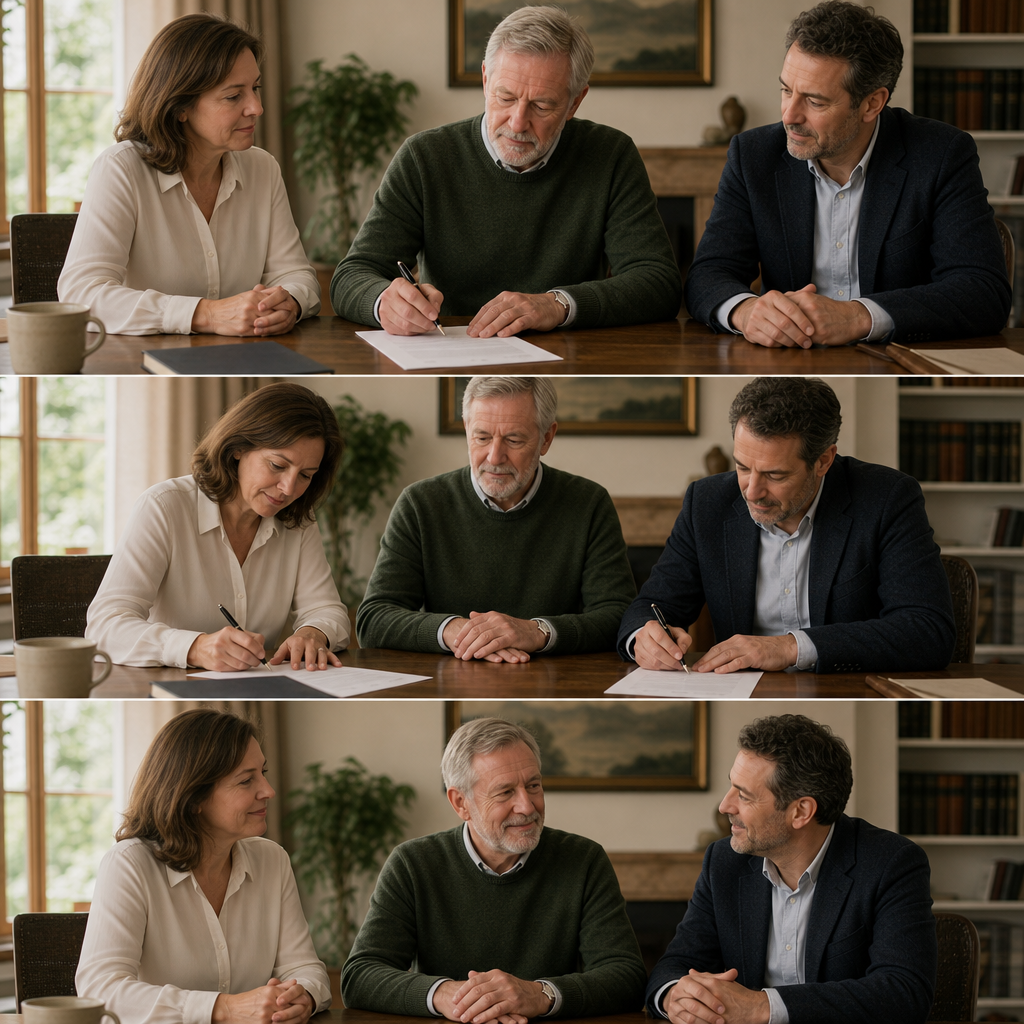
A valid will in South Australia generally needs to be in writing, signed with testamentary intention and witnessed in accordance with the Succession Act 2023 (SA). The witnesses must be present as required by the legislation and attest the signature. Capacity, knowledge of the document and freedom from undue influence are also essential.
Formal signing requirements
The Succession Act 2023 (SA) provides the legal framework for making and interpreting wills. In general, the testator signs the will, or acknowledges the signature, in the presence of two witnesses who are present at the same time. The witnesses then attest and sign in the testator's presence.
This sounds straightforward. In practice, execution mistakes remain possible. Common problems include:
- a witness signing later or in a different place
- pages being replaced, detached or left uninitialled after an amendment
- the testator signing in the wrong section
- handwritten changes being made after execution
- using a beneficiary, or someone connected with a beneficiary, as a witness
- failing to record how a person with impaired vision, literacy or mobility understood and approved the document.
A beneficiary witnessing a will does not automatically produce the same outcome in every circumstance. It can, however, place the gift and the estate at avoidable risk. Independent adult witnesses are the prudent choice.
Testamentary capacity
A person making a will must understand the nature and effect of the document. They should broadly understand the property being dealt with, recognise the people who may reasonably expect consideration and be able to weigh competing claims.
A medical diagnosis does not automatically establish or remove testamentary capacity. Capacity is decision-specific and assessed when instructions are given and the will is signed. Where capacity may later be questioned, a careful lawyer should record the instructions, ask the client questions without interested family members speaking for them and consider whether contemporaneous medical evidence is appropriate.
Knowledge, approval and undue influence
The testator must know and approve the will's contents. Concern may arise where a person who benefits substantially arranged the appointment, supplied the instructions and remained present throughout the meeting.
Undue influence requires more than persuasion, disappointment or family pressure. The question is whether the testator's free will was overborne. Sound practice is to meet the client privately, explore unusual distributions and record the client's reasons in appropriate detail.
Informal wills are not a safe plan
South Australian courts can, in some circumstances, admit an informal document where the statutory test is met and the evidence establishes that it was intended to operate as a will. That does not make text messages, notes or unsigned documents reliable estate planning tools.
An informal will application can require affidavit evidence, court submissions and contested factual findings. Proper execution is usually far simpler than asking a court to reconstruct intention after death.
What should estate planning in South Australia cover?

Estate planning in South Australia should identify every asset, its legal owner, how control passes on death and whether the will governs it. It should also address incapacity, superannuation, business interests, debts, tax considerations and substitute decision-makers. Drafting the will before completing this ownership map can leave serious gaps.
Start with ownership, not estimated value
An asset list is useful, but ownership is more important than a rough valuation. Wills commonly deal with assets held solely by the deceased, including real property, bank accounts, personal possessions and shares registered in that person's name.
Other interests may pass outside the will or require separate analysis:
- Jointly owned property may pass to the surviving joint tenant by survivorship.
- Property held as tenants in common does not pass automatically to the co-owner. The deceased's share ordinarily forms part of the estate.
- Superannuation death benefits are controlled by superannuation law, fund rules and any valid nomination, not simply by a clause in the will.
- Trust assets belong to the trust, although control of the trust may need succession planning.
- Company assets belong to the company, while the deceased's shares may form part of the estate.
- Life insurance proceeds depend on policy ownership and any beneficiary nomination.
This distinction is critical. A will leaving "all my assets" to a spouse cannot control an asset that never enters the estate.
Plan for incapacity as well as death
A will operates after death. It does not authorise another person to manage your finances while you are alive but unable to act.
A complete plan may therefore include an enduring power of attorney and an advance care directive. These documents perform different functions and should use decision-makers who understand their responsibilities. The person best suited to act as executor is not automatically the best person to make financial, accommodation or health decisions during incapacity.
Blended families require precise planning
Blended families create competing obligations. A person may want to support a current spouse while preserving an inheritance for children from an earlier relationship. A simple gift of the whole estate to the surviving spouse gives that spouse ownership and control. It does not guarantee what ultimately passes to the children.
Possible approaches include testamentary trusts, rights to occupy a property, life interests, specific gifts and carefully coordinated beneficiary nominations. Each option changes control, flexibility and dispute risk. Generic clauses rarely deal adequately with every family's property arrangements.
For advice focused on local succession issues, a Gawler estate lawyer can examine the legal ownership structure before recommending documents.
When should a will include a testamentary trust?
A testamentary trust may be suitable when beneficiaries need continuing asset management, protection or flexibility after the will-maker's death. It can assist families with minor children, vulnerable beneficiaries, blended-family concerns or substantial assets. It should only be used after considering trustee control, administration, tax advice and the family's actual needs.
A testamentary trust is created by a will and begins after death when the relevant estate assets are transferred to the trustee. Instead of receiving an inheritance outright, a beneficiary may receive benefits under the trust's terms.
Situations where a trust may help
A testamentary trust may be worth considering where:
- children are too young to manage an inheritance
- a beneficiary has a disability or requires long-term support
- a beneficiary has difficulty managing money
- there are concerns about bankruptcy, creditors or relationship breakdown
- the estate includes assets that should be managed rather than immediately sold
- a blended family needs a balance between present support and future inheritance.
The protection is not absolute. Outcomes depend on the trust terms, who controls it, how distributions are made and the applicable family, bankruptcy and taxation law. Promising complete "asset protection" is neither precise nor responsible.
Control matters more than the label
Calling a clause a testamentary trust does not make it effective. The drafting must answer practical questions:
- Who is the initial trustee?
- Can the trustee be replaced, and by whom?
- Which beneficiaries can receive income or capital?
- Does one beneficiary control distributions to themselves?
- What happens if the trustee dies, loses capacity or enters bankruptcy?
- When, if ever, must the trust end?
- How are disagreements resolved?
A trust can create accounting, taxation and administrative work. If the estate is straightforward and adult beneficiaries can responsibly manage their inheritances, direct gifts may be more appropriate. Good estate planning lawyers in Gawler should explain both the protection and the burden.
What are an executor's duties?
An executor must locate the will, protect estate property, identify liabilities, apply for probate where required, deal with tax matters and distribute the estate according to law. The executor must act honestly, keep proper records and avoid unauthorised personal benefit. It is an active fiduciary role, not an honorary appointment.
The practical sequence
Executor duties commonly include:
- locating the original will and confirming there is no later document
- arranging the funeral while checking any directions in the will
- securing property, insurance, records and valuables
- identifying beneficiaries, assets, liabilities and jointly owned property
- notifying relevant organisations and obtaining valuations where needed
- applying to the Supreme Court of South Australia for probate when required
- collecting assets and paying properly established liabilities
- attending to taxation and estate accounts
- resolving claims before distribution
- transferring or distributing the remaining estate under the will.
These steps arise from the executor's legal role and the estate administration framework in South Australian succession legislation. The precise process depends on the estate.
Choosing an executor
Choose an executor for judgement and reliability, not simply age or family seniority. The person should be willing to act, capable of handling records and able to communicate with beneficiaries.
Potential conflict also matters. Appointing one child over others may be sensible if that child is organised and trusted. It may be unwise where relationships are already hostile or the executor has a personal interest in disputed property.
Substitute executors should be named in case the first choice dies, loses capacity or renounces the role. More executors do not always produce better administration. Joint appointments can provide oversight, but entrenched disagreement can delay every decision.
Executors can obtain legal, accounting and valuation assistance. They should not assume professional assistance transfers their responsibility. They remain accountable for estate decisions.
When should you update or replace your will?
You should review your will whenever a material relationship, family, asset, health or business change occurs. Marriage, divorce, separation, births, deaths, property changes and altered executor circumstances can affect the plan. A review does not always require a new will, but assumptions should be checked against current South Australian law.
Events that should trigger a review
Arrange a review if:
- you marry, separate, divorce or begin a new de facto relationship
- a child or grandchild is born
- a beneficiary or executor dies or becomes unsuitable
- you buy, sell or restructure significant property
- you establish or dispose of a business
- you change a superannuation nomination
- a beneficiary develops a disability, addiction, creditor issue or relationship concern
- you move between states or countries
- your intended distribution changes.
Under the Succession Act 2023 (SA), marriage and divorce can affect an existing will. The consequences depend on the document and circumstances, including whether the will was made in contemplation of marriage. Do not rely on a general assumption that an old will remains effective or has been completely cancelled.
Do not amend a signed will by hand
Crossing out words, adding names in the margin or attaching a replacement page can create uncertainty about timing, intention and execution. A formal codicil can amend a will, but a fresh will is often clearer where the changes are substantial.
The original signed document should be stored securely. Executors need to know where it is held, but beneficiaries do not necessarily need unrestricted access. Destroying an original will can create a presumption of revocation in some circumstances, while losing it can force the executor to establish a copy through additional evidence.
How can someone challenge a will in South Australia?
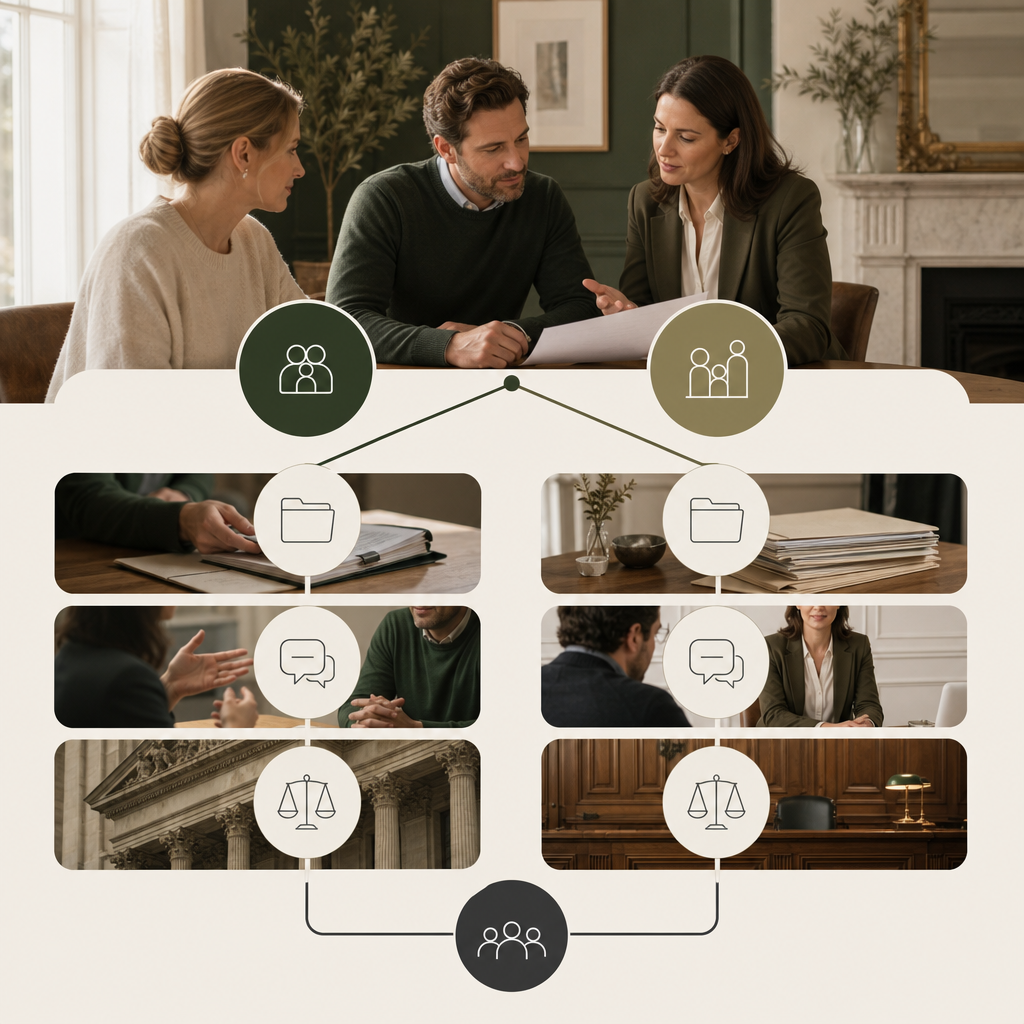
A will may be challenged by disputing its validity or by seeking further provision from the estate under South Australian legislation. These are different claims with different evidence. Potential applicants, executors and beneficiaries should obtain advice immediately because statutory time limits, probate steps and estate distribution can materially affect available options.
Challenging validity
A validity dispute may allege that:
- the document was not properly executed
- the deceased lacked testamentary capacity
- the deceased did not know and approve its contents
- undue influence affected the will
- fraud or forgery occurred
- a later will revoked the document presented for probate.
A suspicious distribution is not enough by itself. Evidence may come from the drafting solicitor's file, medical records, witnesses, earlier wills, correspondence and the deceased's conduct.
A person concerned about an impending probate grant may need advice about lodging a probate caveat. A caveat is not a tactical device for forcing a settlement. It should relate to a genuine issue concerning the grant, and leaving an unjustified caveat in place can have costs consequences.
Family provision claims
The family provision regime in the Succession Act 2023 (SA) permits people within the legislation's eligible categories to seek further provision where the deceased's estate has not made adequate provision for their proper maintenance, education or advancement in life.
Eligibility is only the first question. The court may consider the relationship, competing claims, financial circumstances, estate size, contributions, conduct and other relevant matters. Equal distribution is not an automatic legal standard.
Applications are generally subject to a six-month period running from the grant of probate or administration under the legislation. Courts have limited powers concerning late applications, but nobody should assume an extension will be granted. Prompt advice is essential.
Executors who know of a threatened claim should obtain advice before distributing. Beneficiaries should understand that an executor may need to preserve the estate while a properly raised dispute is assessed.
How wills lawyers reduce avoidable estate risk
Wills lawyers reduce risk by testing instructions, identifying assets outside the estate, documenting capacity and explaining how each clause operates. Their value is not limited to producing a signed document. The central task is aligning ownership, control, beneficiary arrangements and succession documents with the client's informed intentions.
A disciplined process should include:
- confirming identity and meeting the will-maker independently where appropriate
- preparing a family and relationship map
- examining legal ownership of important assets
- reviewing company, trust and superannuation arrangements
- identifying people who may expect provision
- testing executor and trustee appointments
- discussing substitute beneficiaries and failed gifts
- explaining foreseeable tax or foreign-asset issues requiring specialist advice
- supervising execution and storing the original safely.
Hypothetical example: blended family and the family home
Consider a person who owns a home as a tenant in common with a second spouse and wants the spouse to remain there after death. The person also wants their share eventually to pass to children from an earlier relationship.
An outright gift to the spouse may defeat the second objective. An immediate gift to the children may force a sale or create co-ownership conflict. A carefully drafted right of occupation or testamentary trust may balance those interests. The document must address insurance, rates, maintenance, departure from the property and eventual sale.
Hypothetical example: business control and estate value
Imagine a business owner whose will gives company shares equally to several adult children. Only one works in the business. Equal share ownership could fragment voting control and create conflict between salary, dividends and sale expectations.
The estate plan might instead coordinate the will with a shareholders agreement, insurance, valuation arrangements and appropriately structured gifts. This example shows why "equal" and "workable" are not always the same.
These examples are hypothetical and are not represented as client outcomes. Actual advice depends on verified ownership, family circumstances and the relevant documents.
At Steven M Clark, we believe clients should be able to relate to us as people as well as lawyers. Steven Clark is actively involved in supervising operations and overseeing standards of work. That oversight matters where careful instructions and exact drafting determine whether a plan works as intended.
Why independent advice matters in contested estates
Our position is that funding arrangements should never distort advice about accepting, rejecting or pursuing a contested-estate settlement. We do not subscribe to no-win-no-fee arrangements. A lawyer's assessment should remain focused on the client's evidence, risk, likely costs and objectives, without the practice acquiring a financial interest that can complicate settlement advice.
This position is particularly relevant when challenging a will. These cases often involve grief, family history and incomplete evidence. A confident allegation is not necessarily a strong legal claim.
Before commencing proceedings, a responsible assessment should examine:
- the precise legal basis of the proposed claim
- whether the person has standing or statutory eligibility
- the available documentary and witness evidence
- applicable time limits
- the estate's composition and liquidity
- the cost and emotional burden of litigation
- reasonable settlement options
- the risk of an adverse costs order.
The same discipline applies to executors defending an estate. Executors should remain neutral when administering the will, preserve evidence and avoid distributing assets prematurely. They should not treat estate money as an unlimited litigation fund for personal family grievances.
Professional independence is part of ethical practice. It also produces clearer advice. The question should be whether a proposed step serves the client's lawful interests, not whether it protects a law firm's contingent fee.
If you need a will prepared, an existing plan reviewed or advice about an estate dispute, contact Steven M Clark. Bring your current documents, asset ownership details and relevant family information so the advice can address the full position.
References
- South Australian Legislation, Succession Act 2023 (SA)
- Courts Administration Authority of South Australia, Probate jurisdiction
- Legal Services Commission of South Australia, Legal information and assistance
Frequently asked
Questions about this
Do I need a lawyer to make a valid will in South Australia?
The law does not require a solicitor to draft every will. However, a lawyer can identify execution problems, ownership issues, potential claims and clauses that do not produce the intended result. Professional drafting is particularly important for blended families, businesses, trusts, overseas assets and vulnerable beneficiaries.
Can I write my own will?
You can prepare your own will, but templates often assume simple ownership and family arrangements. A document may be formally valid yet fail to control superannuation, jointly held property or trust assets. Mistakes may only become apparent when the will-maker can no longer correct them.
What happens if I die without a will in South Australia?
Your estate is distributed under the intestacy provisions of South Australian succession legislation. The statutory order may not match your preferences. An administrator must also be appointed because no executor was selected by will.
Does marriage or divorce cancel a will?
Marriage and divorce can significantly affect a South Australian will, but the result depends on the legislation and the document's wording. A will made in contemplation of marriage may be treated differently. Divorce may revoke provisions involving a former spouse without necessarily cancelling the entire will.
How long does an executor have to distribute an estate?
There is no single reliable timeframe for every estate. Probate, property sales, taxation, missing beneficiaries, foreign assets and disputes can affect administration. Executors should proceed diligently but should not distribute before liabilities and properly raised claims have been addressed.
How long do I have to challenge a will in South Australia?
A family provision application is generally required within six months after the grant of probate or administration under the Succession Act 2023 (SA). Validity disputes involve different procedures. Seek legal advice immediately rather than relying on a possible extension.