Farm Succession in South Australia: Promises to the Child Who Stayed, Wills and Handing On the Family Farm
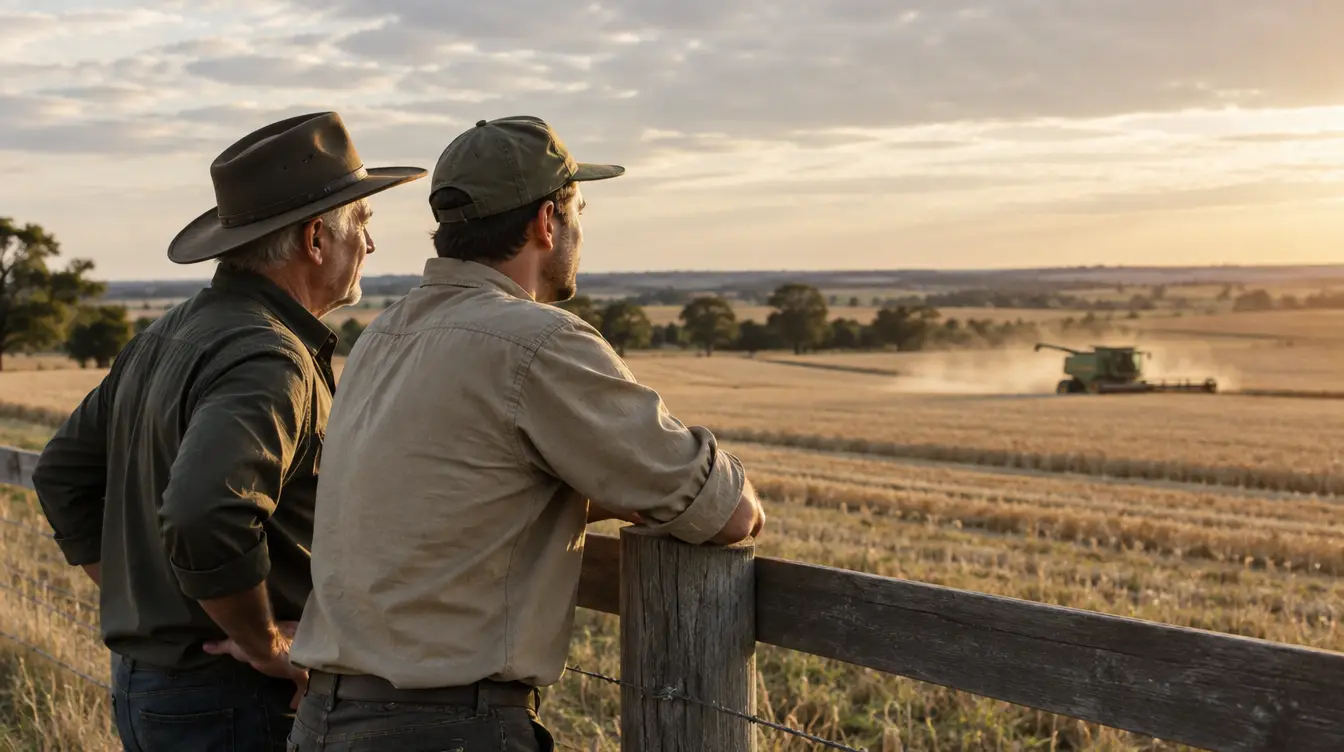
Farm succession in South Australia works when the plan is written down, not promised. That means a will, the right trust or company documents, enduring powers of attorney, and a family agreement that balances the child who farms with those who do not. Informal promises to the child who stayed can be enforced by courts as proprietary estoppel.
Across Light, the Adelaide Plains and the Barossa, we see the same pattern. A parent says, 'stay on and the farm will be yours one day.' The child stays, often for decades, on modest wages. Nothing is written down. Then a parent dies, loses capacity, or changes their mind, and the family finds out what the promise was really worth.
This article explains how those disputes start, when a court will step in, and how to hand on the family farm without leaving a legal problem behind. It is written for farming parents in their mid-fifties and older, and for adult children who have worked the farm on an understanding.
Key Takeaways
- A spoken promise that 'the farm will be yours' is risky for everyone, including the child it was made to.
- Courts can enforce informal promises about land under proprietary estoppel, as the High Court confirmed in Giumelli v Giumelli (1999) and Sidhu v Van Dyke (2014).
- Fair is not the same as equal. Equalisation payments, insurance, staged transfers and leases can balance farming and non-farming children.
- A will does not control land held in a company, trust or partnership. The entity documents decide who ends up in control.
- Capital gains tax concessions and SA stamp duty can change the cost of a transfer, so lawyer and accountant should plan together.
- Start the family conversation early, at a quiet point in your farming calendar, with both generations in the room.
Summary Table
| Issue | What it means for the farm | Main risk if ignored |
|---|---|---|
| Informal promise | A verbal assurance that a child will inherit | Estoppel claim against a parent or the estate |
| Will | Controls assets in the deceased's personal name | Out of date or silent on the farm |
| Company, trust or partnership | Controlled by its own documents, not the will | Wrong person ends up in control |
| Testamentary trust | Holds an inheritance on trust for a beneficiary | Farm exposed to a child's divorce or creditors |
| Enduring power of attorney | Lets a trusted person act if you lose capacity | Farm decisions stall or are made by the wrong person |
| Family provision | Eligible people can ask the court to vary a will | Non-farming child challenges the plan |
| Tax and duty | CGT and stamp duty depend on structure and timing | Avoidable cost on transfer |
The Promise Problem: Why 'The Farm Will Be Yours' Goes Wrong
'The farm will be yours one day' fails because it is a promise with no terms. It does not say which land, when, what the other children receive, or what happens if the relationship sours. Without a written plan, each person fills the gaps differently, and the gaps become the dispute.
Most parents who make this promise mean it. They are not being careless. They are being practical in the way farming families often are: the child is here, the work needs doing, and talking about money feels awkward. But a promise made at the kitchen table in 1998 has to survive a lot. It has to survive a new spouse, a drought, a bank, a sibling who needed help with a house deposit, and a parent's changing health.
The ABS publishes agriculture statistics, and its Census data have consistently shown that farm operators are older, on average, than the Australian workforce as a whole (see the ABS agriculture page in the references). That means a large number of South Australian farms are approaching a handover, and many are doing it on understandings rather than documents.
Consider a composite example, not a single client. A daughter leaves school, passes up a city career and works the family mixed cropping and sheep property near Light for more than twenty years. She is paid a modest wage, lives in a farm cottage, and puts her own savings into a header and a shed. Her father tells her the farm is hers. Her brother, who moved to Adelaide and built a career, hears something different: that everyone will 'get a fair go'. When the father dies, his will, last signed years ago, leaves the farm to all three children equally. The daughter holds a promise. Her siblings hold a will. Neither side is being dishonest, and both feel wronged.
That is how a well-meant promise becomes litigation. The person who stayed has relied on it, and the person who left has been told something else.
When a Promise Becomes a Legal Claim: Proprietary Estoppel Explained
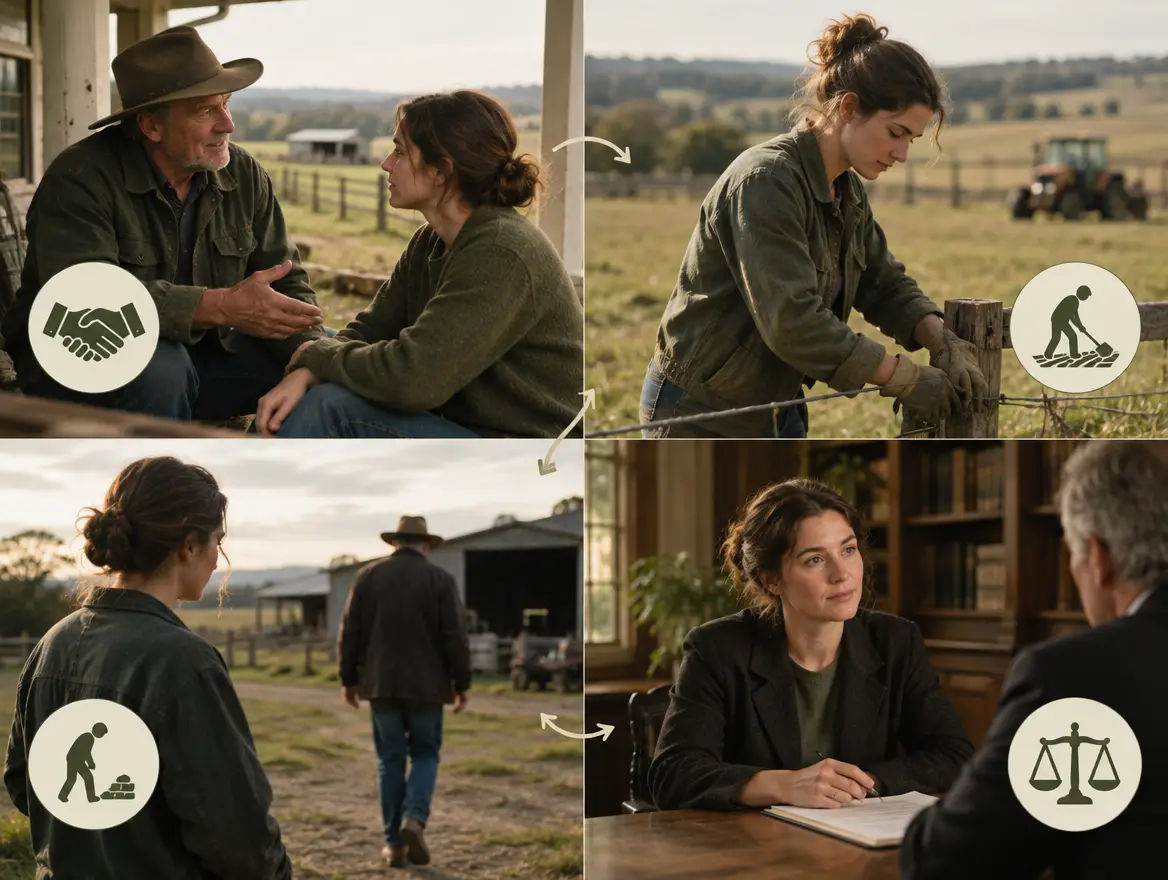
Proprietary estoppel lets a court enforce an informal promise about property when someone relied on it to their detriment and it would be unconscionable for the promisor to go back on it. For farming families, that can mean a claim against a living parent or against the estate by the child who stayed.
In plain English, a court asks four questions:
- Was there an assurance or encouragement, such as 'this will be yours'?
- Did the child adopt that assumption, and was it reasonable to do so?
- Did the child act on it to their detriment, for example by working for low or no wages, giving up other careers, or investing in the farm?
- Would it be unconscionable for the parent, or the estate, to depart from the assumption?
Two High Court decisions matter most. In Giumelli v Giumelli (1999), which came from South Australia, a son had worked on the family property in reliance on an expectation of getting land. The High Court accepted that an equity arose, but it did not simply order the land transferred. It held that the remedy should be the minimum needed to do justice, and it awarded compensation in money in place of land. The relationship had broken down and the court took into account the effect on other family members.
In Sidhu v Van Dyke (2014), the High Court dealt with an informal promise of land made within a close personal relationship. The court restated the doctrine in terms of an assumption induced by one person and relied on by another, and treated unconscionable departure as the heart of the matter. The case is a reminder that the doctrine is flexible and fact-driven. It is not confined to commercial dealings.
Two practical points follow. First, a court may order money rather than land, so the child who stayed may not get the farm even if they win. Second, litigation of this kind is slow, expensive and public. It is rarely good for a family business. We would much rather see a family record its understanding in documents than argue about it after the event.
This is general information, not advice on your situation. Estoppel claims depend heavily on their facts.
Fair Versus Equal: Balancing Farming and Non-Farming Children
Fair does not have to mean equal. Many families give the farm to the child who works it and balance the others with equalisation payments, life insurance, other assets, staged transfers or a lease. The right mix depends on whether the farm can carry the debt, and on what each child actually needs.
The core problem is that a farm is often most of the family's wealth, and it cannot be cut into equal slices without ending the business. A farm that is divided three ways usually stops being viable. A farm given entirely to one child can leave the others with almost nothing. The goal is to keep the farm working while giving the other children something that feels genuine. These are the common tools:
| Option | How it works | Suits | Watch out for |
|---|---|---|---|
| Equalisation payments | Farming child pays siblings over time or on a trigger event | Farms with strong cash flow | Debt the farm cannot service |
| Life insurance | Policies fund a payment to non-farming children on death | Younger parents who can still get cover | Premiums, health, and ownership of the policy |
| Other assets | Non-farming children receive investments, property or cash | Families with assets outside the farm | The farm is often the main asset |
| Staged transfer | Farm interests pass to the farming child gradually | Parents who want to stay involved | Tax, duty and control at each stage |
| Lease | Farming child leases land from parents or the estate | Families testing the arrangement | Rent, security of tenure and valuation |
There is also a protective step that families often miss. If a farming child separates from a partner, the farm can become part of a property dispute. A binding financial agreement can protect farm assets in that situation, and we deal with it as a separate topic. A testamentary trust (covered below) can do similar work for an inheritance.
None of these options is automatically right. A farm with high debt may not support equalisation payments. A parent in poor health may not be able to buy insurance. The answer is to look at the numbers early, and to be honest about what the farm can carry.
The Documents That Matter: Wills, Trusts and Powers of Attorney
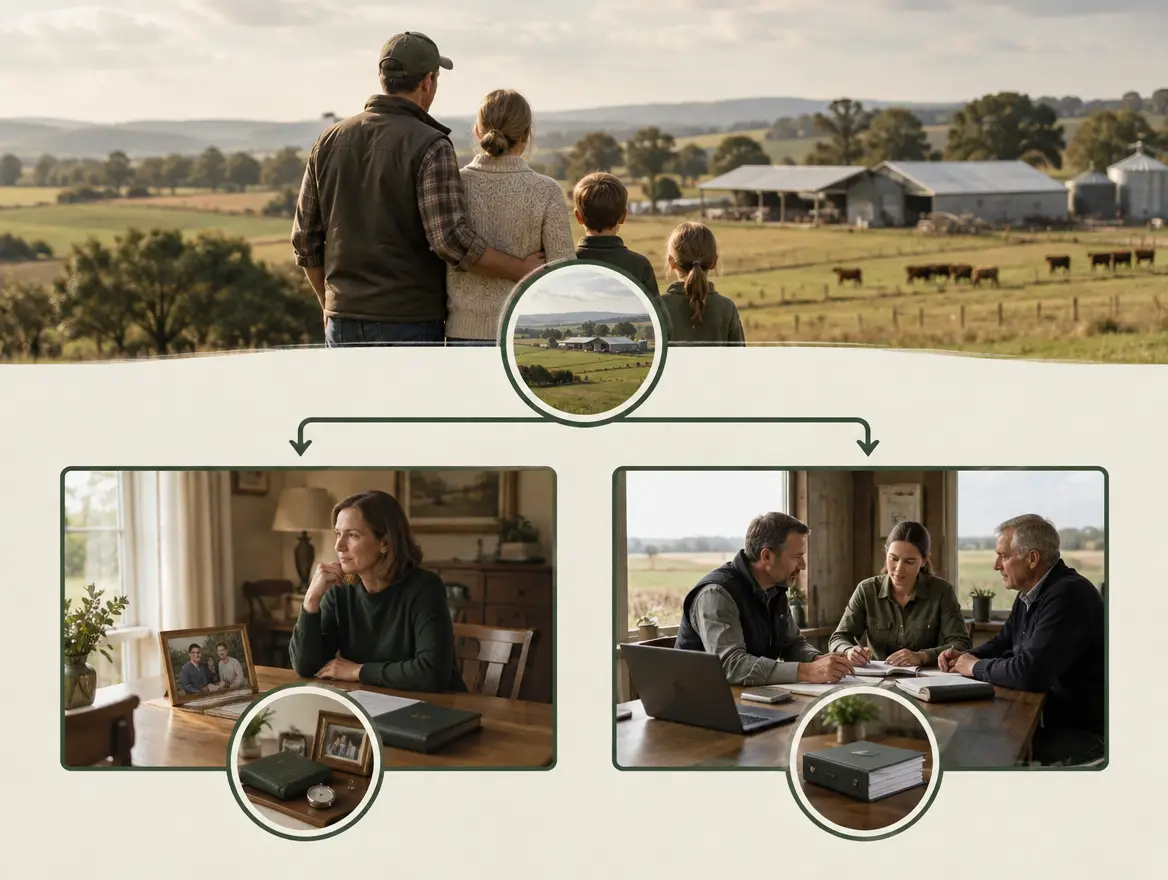
Four documents carry most of the weight: a will, a testamentary trust where appropriate, enduring powers of attorney, and the governing documents of any company, trust or partnership that owns the farm. A will only deals with assets in your personal name, so entity-held land usually does not pass under it.
This is the point that surprises many farmers. If the farm is owned by a family company, the company owns the land. You own shares. If it is held by a family trust, the trustee holds the land and you may hold only a role, such as appointor or director of the trustee company. If it is a partnership, the partnership agreement and the law of partnership govern what happens when a partner dies. Your will cannot give away land you do not own personally.
So succession planning has to reach into the entity documents. Who holds the shares? Who becomes the appointor of the trust, and so controls who the trustee is? What does the company constitution or shareholders agreement say on death or incapacity? Assets held as joint tenants also pass by survivorship, not by the will. A well-drafted will on top of poorly set up entities can still leave the wrong person in control.
Wills. A will should be current and specific about the farm. It should deal with who receives the farm interests, who controls the entities, and how other children are provided for. If your will predates a marriage, separation, grandchildren or a restructure, review it. We explain when and how to change a will in our guide to updating or revoking a will, and the role of the person you appoint in our guide to executor duties and estate administration.
Testamentary trusts. A testamentary trust is created by your will and takes effect on death. It can hold a child's inheritance so that it is better protected from a child's divorce, bankruptcy or poor financial decisions. It can also provide tax benefits for some beneficiaries, which your accountant should confirm. Our guide to testamentary trusts in Australia covers the detail.
Enduring powers of attorney. If a parent loses capacity, someone must be able to sign contracts, deal with the bank and make farm decisions. An enduring power of attorney (EPA) covers financial matters. In South Australia, an advance care directive deals with health and personal decisions. We cover both in our guide to enduring powers of attorney and advance care directives in South Australia. Without an EPA, a family can face delay, cost and a tribunal process at the very moment the farm needs decisions.
Our estate planning lawyers work through all of these together, because a farm plan fails when one document contradicts another.
Family Provision Risk in South Australia
Family provision law lets certain eligible people, including children, ask the court to vary a will they say fails to make adequate provision for them. In South Australia this now sits in the Succession Act 2023 (SA), which replaced the Inheritance (Family Provision) Act 1972 from 1 January 2025. A farm plan that ignores a non-farming child invites exactly that application.
This matters for farming families because the usual instinct, leaving the farm to the child who works it, can leave other children with little. A court can look at the size of the estate, each person's needs and contributions, and the deceased's reasons. Strict time limits apply once probate is granted, so anyone considering a claim should get advice promptly.
The practical protection is a plan that gives non-farming children something real and records why. A balanced plan, with an explanation, is much harder to attack than a bare gift of the farm to one child. We cover contesting a will in South Australia in a separate guide, so we will not repeat it here. Please also check the current legislation, because these laws can be amended.
Tax and Duty on Handing On the Family Farm
Handing on a farm can trigger capital gains tax and stamp duty, but concessions may reduce or remove both. The CGT small business concessions are the main tool, and SA conveyance duty depends on how the transfer is structured. Get your accountant and lawyer working together before any transfer, not after.
Capital gains tax. According to the ATO (https://www.ato.gov.au/businesses-and-organisations/capital-gains-tax/cgt-concessions-for-small-business), the small business CGT concessions include the 15-year exemption, the 50% active asset reduction, the retirement exemption and the small business rollover. To access them, a business generally must meet either the small business entity turnover test (under $2 million aggregated turnover) or the maximum net asset value test ($6 million), and the asset must be an active asset. Further conditions apply to each concession, including age, retirement and ownership periods for the 15-year exemption. Land that is leased out, or used partly for non-farming purposes, can create traps. Check the current rules with your accountant before relying on any concession.
Passing the farm under a will is generally treated differently from a lifetime transfer, but it does not remove tax. The beneficiary usually inherits the cost base, so the gain can be deferred rather than erased. That is one more reason the timing of a transfer matters.
Stamp duty. In South Australia, RevenueSA administers conveyance duty on property transfers. Some exemptions and concessions can apply to family transfers, but whether they do depends on the parties, the structure and the property. Transfers of land held in a company or trust, and transfers of interests in those entities, raise their own questions. Do not sign anything until you have confirmed the duty outcome.
The point is simple. A transfer that looks tidy on paper can be expensive, and a poorly timed one can waste a concession. We work alongside the family's accountant so that the legal structure and the tax outcome match.
Starting the Conversation: A Family Meeting Checklist
Start by getting both generations in a room, with an agenda, away from the farm office and outside peak work. Aim for a quiet window in your own calendar, such as after seeding or in the weeks before harvest. Bring the facts first: what the farm owns, owes and earns.
Timing matters more than most families expect. Nobody plans well during harvest, vintage or shearing. If your busy period is October to December, aim for winter or early spring so the family is not rushed, and so any documents can be settled before harvest 2026 begins. Barossa growers will have a different window around vintage.
A practical checklist:
- Gather the facts. List assets, debts, entity structures, leases and insurance. Bring the current will and any EPA.
- Decide who attends. Parents and all adult children, and where relevant partners, though some families prefer to meet children first.
- Set the goals. Does the farm stay in the family? Who farms it? What does each parent need to retire on?
- Talk about the promise. Say aloud what has been understood. Write down what each person believes they were told.
- Discuss fairness. What would be fair to the child who stayed, and to those who did not?
- List the unknowns. Tax, duty, valuations and bank requirements need professional input.
- Agree next steps. Book a follow-up, and agree who will brief the accountant, the financial adviser and the lawyer.
Expect the first meeting to be uncomfortable. That is normal. An uncomfortable meeting now is cheaper than a dispute later.
Why We Do Not Subscribe to Handshake Arrangements
We do not accept handshake arrangements for an asset as valuable as the family farm. A promise that feels solid at the kitchen table has no terms, no evidence and no protection for anyone. Writing it down costs little. Leaving it unwritten can cost the farm, the relationships, or both.
Here is our position, and it is a contrarian one in rural communities where a handshake still carries weight. A handshake is a fine way to agree on a hay price. It is a poor way to hand on a lifetime of work. It protects nobody, and it often harms the very person it was meant to reward. The child who stayed carries all the risk: unpaid years, no security, and the possibility of a claim they must fight to prove. The parent carries a risk too, because they may have created a legal obligation they did not intend. The non-farming children carry the risk of finding out too late.
We also take a firm view on how these disputes are funded. We do not offer no win no fee arrangements in this area. Ethically, that kind of arrangement is only justified where there is a genuine risk to the client's prospects, and that is hard to judge at the start of a family dispute. It can also put a lawyer's interest in being paid in conflict with a client's interest in deciding whether to accept a settlement. We will not be in that position. Families deserve advice that is not influenced by how the fee is structured.
Our approach is to help families put a plan in place so they never need to run an estoppel claim. Steven Clark is actively involved in supervising operations and overseeing standards of work, so farming families deal with experienced lawyers who work hard for them and who understand that the farm is a family, not a file.
If you take one action from this article, make it this: book a farm succession meeting, with both generations present, before harvest 2026. Contact Steven M Clark to arrange it.
References
- Australian Bureau of Statistics, Agriculture statistics
- Australian Taxation Office, CGT concessions for small business
- High Court of Australia, Giumelli v Giumelli [1999] HCA 10 (AustLII)
- High Court of Australia, Sidhu v Van Dyke [2014] HCA 19 (AustLII)
- RevenueSA, Stamp duty and conveyance duty information
- South Australian Legislation, Succession Act 2023 (SA)
Frequently asked
Questions about this
What is farm succession planning in South Australia?
Farm succession planning is the process of deciding who will own, control and work the farm in future, and putting that into legal documents. It covers wills, trusts, company and partnership documents, powers of attorney, tax and duty, and how non-farming children will be treated.
Can a verbal promise that the farm will be yours be enforced?
Sometimes. Under proprietary estoppel, a court can enforce an informal promise if the person relied on it to their detriment and it would be unconscionable to go back on it. The remedy may be money rather than land. The outcome depends heavily on the facts and the evidence.
Does my will cover a farm held in a company, trust or partnership?
Not directly. A will deals with assets in your personal name. If the farm is held in a company, trust or partnership, the entity's own documents decide who controls it. Your will may deal with your shares or interests, but the structure documents must align with it.
Is it fair to leave the farm only to the child who worked it?
It can be, if the other children are provided for in other ways. Equalisation payments, insurance, other assets or a lease can balance the outcome. A plan that gives non-farming children nothing risks a family provision application and ongoing family conflict.
Do we pay capital gains tax when a farm passes under a will?
Usually there is no CGT on death itself, but the beneficiary generally inherits the cost base, so the gain can be deferred rather than removed. Small business concessions may help on a later sale or lifetime transfer. Get advice from your accountant on your specific facts.